Yumbe District: Lighting the Path to System-Wide Adoption of Learning through Play
Yumbe District, one of Uganda’s largest refugee-hosting districts, has long faced complex education challenges.
Feb 13, 2026
Yumbe District: Lighting the Path to System-Wide Adoption of Learning through Play
Yumbe District, one of Uganda’s largest refugee-hosting districts, has long faced complex education challenges, including overcrowded classrooms, limited teaching and learning resources, and the difficulty of delivering quality education in both humanitarian and development settings.
With approximately 70% of learners enrolled in pre-primary and primary education and over 400 schools serving both refugee and host communities, Yumbe represents one of the most demanding education contexts in Uganda.
Before the introduction of Learning through Play (LtP), district education monitoring reports in Yumbe indicated low literacy and numeracy outcomes, poor attendance rates, high learner dropout, and high teacher turnover. Within this context, learning through Play was introduced under the PlayMatters program. The approach was designed to address persistent learning gaps, low learner engagement, and high dropout risks, particularly in pre-primary and primary education across Uganda’s nine refugee-hosting districts.
Over a five-year implementation period, learning through Play was rolled out across multiple pre-primary and primary schools in Yumbe District, reaching teachers in both refugee and host community schools. Through structured training, coaching, and continuous professional development, teachers were equipped with practical, play-based pedagogical skills to support inclusive, engaging, and learner-centered classrooms.
Notable Improvements
As teachers applied the Learning through Play methodology, routine monitoring and classroom observation indicated positive trends in learner enrolment and attendance over the implementation period. Schools reported more consistent learner participation, alongside improved classroom engagement and reduced disruption during lessons.
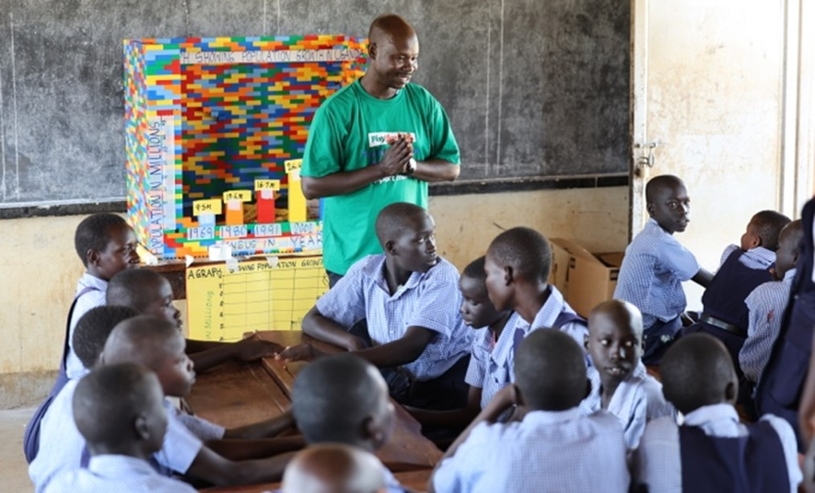
These trends indicate improved learner retention and classroom quality, thereby strengthening the case for the institutionalization of Learning through Play within district education systems. In classrooms across Yumbe District, teachers describe a noticeable shift in how learning happens. Lessons increasingly incorporate small-group activities, guided play, and the use of locally available materials to support literacy and numeracy.
Rather than relying solely on teacher-led instruction, learners are encouraged to explore, ask questions, and collaborate with peers through structured play aligned to curriculum objectives. Teachers report improved classroom management, with learners more engaged, motivated, and attentive during lessons, particularly in large and multilingual classrooms common in refugee-hosting contexts.
Komakech Ronald, Primary Five teacher at Koro Primary School in Yumbe District
“Through play-based activities, learners have become more confident to express themselves and work with their peers. This has improved interaction in the classroom and supported learning across different ability levels,” shared Komakech Ronald, Primary Five teacher at Koro Primary School in Yumbe District
Significantly, Yumbe District Council adopted a resolution to implement Learning through Play across the entire district, formally embedding the approach within district education systems.
As the first district in Uganda to adopt a council resolution on Learning through Play, Yumbe is not only advancing learning outcomes for its own learners, but also demonstrating a practical, district-led blueprint for the system-wide adoption of play-based learning nationally.
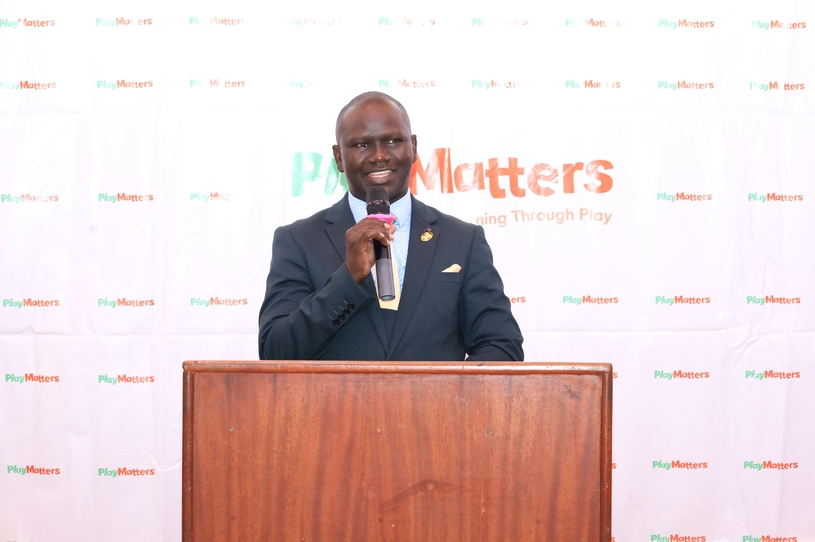
Hajj Abdul Mahmoud Mutalib, Chairperson Local Council V, Yumbe District.
“This is not just an innovation; it is a necessity,” noted Hajj Abdul Mahmoud Mutalib, Chairperson Local Council V, Yumbe District. “PlayMatters has shown us that inclusive, play-based learning can thrive even in refugee-hosting districts like Yumbe. If play can make learning meaningful here, then it can work anywhere.
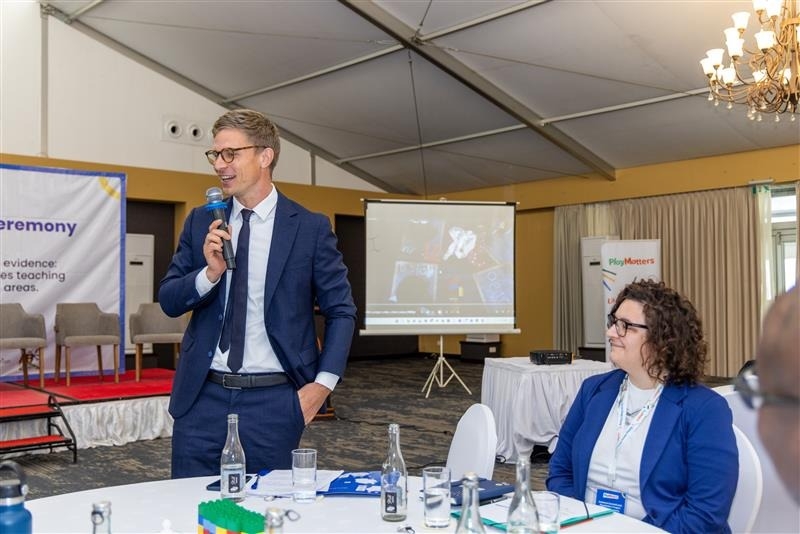
Adam Sparre Spliid, Deputy Ambassador of the Royal Danish Embassy in Uganda, During a PlayMatters Evidence Summit in November 2025
"Uganda continues to be a global example of solidarity. PlayMatters has redefined what quality education in crisis settings can look like. Even in the most challenging environments, learning becomes engaging, inclusive, and transformative, said Adam Spliid Deputy Danish Ambassador to Uganda."
By embedding Learning through Play in district plans, budgets, and routine education systems, Yumbe District demonstrates how evidence-based classroom practice can be translated into durable policy action.
Yumbe District shows that Learning through Play can move from classroom-level practice to system-level adoption when districts prioritize teacher training, continuous professional development, and strong collaboration between schools, local governments, and national actors. Other districts can replicate and build on Yumbe’s experience by embedding play-based pedagogy into district education plans, teacher support systems, and routine supervision structures, demonstrating how Learning through Play improves enrolment, retention, and overall quality of learning within Uganda’s existing curriculum framework.