From a tree shade to classrooms of joyful learning
How Learning through Play transformed Bright Future Primary School
Nov 26, 2025
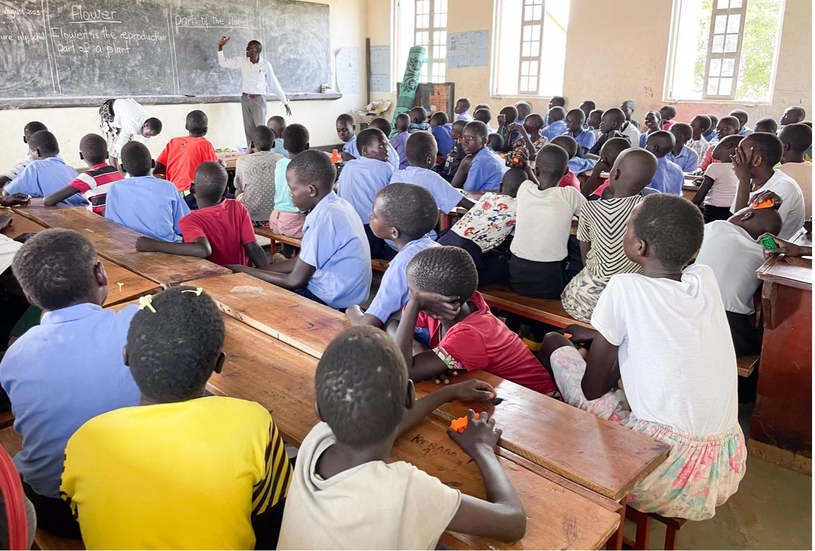
In Palabek Refugee Settlement, in Lamwo District, Northern Uganda, Bright Future Nursery and Primary School has become a beacon of hope for thousands of host community and refugee children. A few years ago, learning at Bright Future Nursery and Primary School took place under the shade of trees, with only a handful of teachers and scarce resources. Today, the Learning Through Play (LtP) approach was introduced by PlayMatters under a consortium led by the International Rescue Committee (IRC) in collaboration with Plan International Uganda, WarChild Alliance Uganda. The school has been transformed into a hub of joyful, interactive, and child-centred learning.
The school’s journey reflects not just an education initiative but a community-wide transformation, with children, teachers, and parents embracing a culture of learning through play that nurtures curiosity, resilience, and collaboration.
A Headteacher’s Vision: Mrs. Aloyo Oryang Stella
When Stella became the first headteacher of Bright Future Primary School in 2022, she inherited a school facing immense challenges. Over 500 children were attending classes under trees, lessons were frequently interrupted by rain, and teachers were overwhelmed by large class sizes and limited resources. Despite these hurdles, Stella was determined to build a school where every child could learn and thrive.
“Our learners were learning under trees. If it rained, lessons had to stop. The teachers were overwhelmed, and resources were almost non-existent,” Stella recalls.
Stella welcomed the LtP approach at Bright Future Primary School, which shifted teaching from rigid, teacher-centred rote learning to active, child-centred learning. Teachers were trained to use locally made teaching and learning materials, integrate games and role-play into lessons, and create safe, joyful classrooms. “PlayMatters also invested in our first school infrastructures, constructing semi-permanent classroom that currently supports about 100 ECD learners and providing essential teaching aids. This gave the school a foundation to fully implement LtP. It was a turning point for us.” She explains.
The results were dramatic. Enrollment rose from 523 learners and five teachers in 2022 to over 2,200 learners by 2023, driven by the appeal of learning through play and active community mobilisation. School ambassadors helped parents understand the value of LtP, encouraging them to send their children to school and even to make the teaching and learning materials at home. Even amid the challenges of 2025, such as donor funding cuts, refugee relocations, and new refugee arrivals, the school continues to serve over 2,000 learners, including nearly 100 older students enrolled in the Accelerated Education Program, which offers a second chance to children who missed out on earlier schooling.
In 2024, Bright Future reached a historic milestone when 24 learners sat for the Primary Leaving Examinations, with 10 achieving Division 2, remarkable progress for a school that just two years earlier had no classrooms. "I greatly attribute this success to PlayMatters for extending the Learning through Play (LtP) intervention to our school. Through this program, teachers have learned to place the learner at the centre of teaching, which has led to positive and visible results.” She noted.
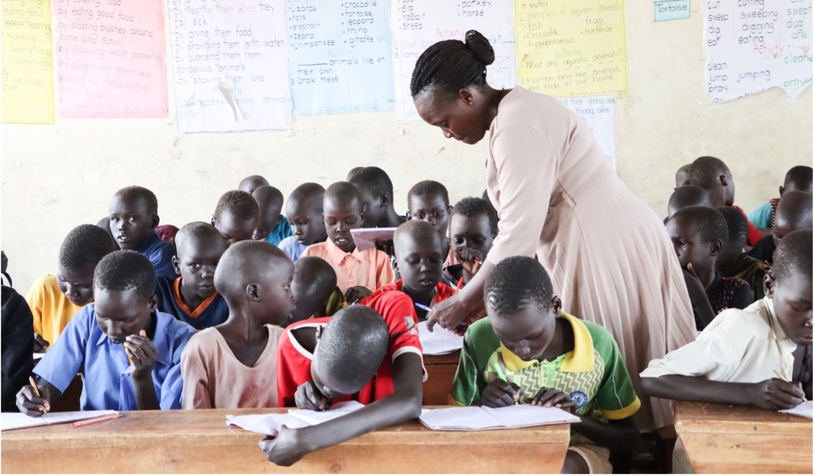
Ms. Stella, reviews Primary Three learners’ books during a literacy lesson. This practice helps ensure that learners are actively engaged and progressing LtP, which emphasizes close monitoring and personalized support to enhance learning outcomes.
Local Leadership: Scaling Up the Vision
The success of Bright Future is intertwined with the leadership of District Education Officer (DEO) Barnabas Langoya, whose vision has expanded LtP beyond a single school to a district-wide initiative. Lamwo District hosts a mix of government, private, and community schools, serving both host-community and refugee populations. “Many people thought Learning through play was just for fun, not serious learning,” Barnabas explains. “But PlayMatters showed us that children learn best when they are actively engaged. Through play, they develop problem-solving, creativity, and social skills.” Barnabas mentioned.
Under his guidance, 35 schools, including Bright Future Nursery and Primary School, were selected to pioneer LtP. Over 400 teachers in the district have since been trained through the integration of learning through play, ensuring sustainability and local ownership. The district supports LtP by coordinating school selection, teacher mobilization, supervision, monitoring, and partner coordination, making certain that active teaching and learning reach children effectively.
Partnerships with other supporting systems, Kitgum Core Primary Teachers’ College, United Nations High Commission for Refugees, Office of the Prime Minister, Windle International, parents, and local leaders have been pivotal in the implementation of LtP in the district. Together, they have ensured technical support, resource mobilisation, and strong community engagement. “Parents have been critical partners,” Barnabas notes. “We’ve sensitized them to understand that play is part of learning. They now support schools by making learning materials from local resources.”
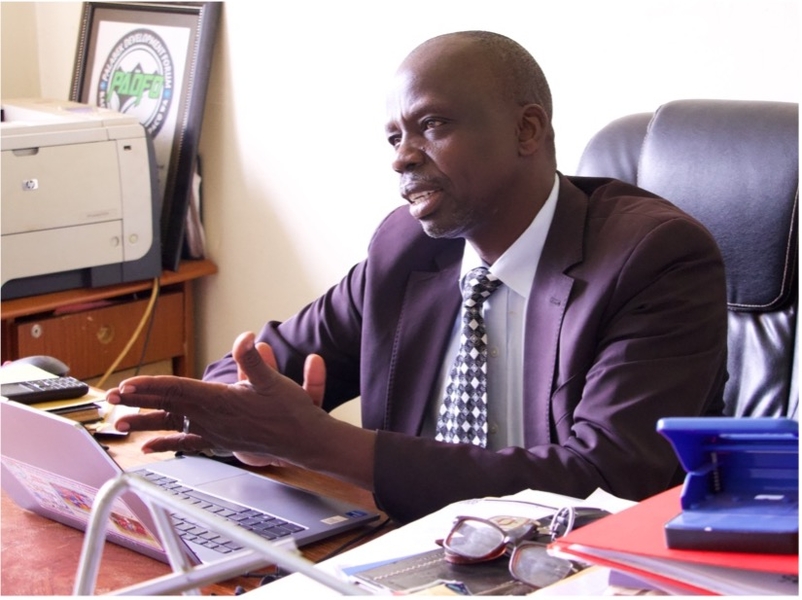
District Education Officer Barnabas Langoya shares the progress and impact of the PlayMatters intervention in Lamwo District.
Voices of Learners
The children themselves are living proof of LtP’s impact. Lakica Monica, a Primary Four learner, shares: “I love Learning through Play because we play games that help us learn. My favourite is group discussions that help us to learn from our classmates.” Nyawech Char, a Primary Four learner,dreams of following in his teacher’s footsteps: “I want to become a teacher one day. I will teach children in a fun way, like my teacher does.”
These voices capture how play fosters confidence, creativity, and ambition, turning classrooms into spaces of hope and possibility.
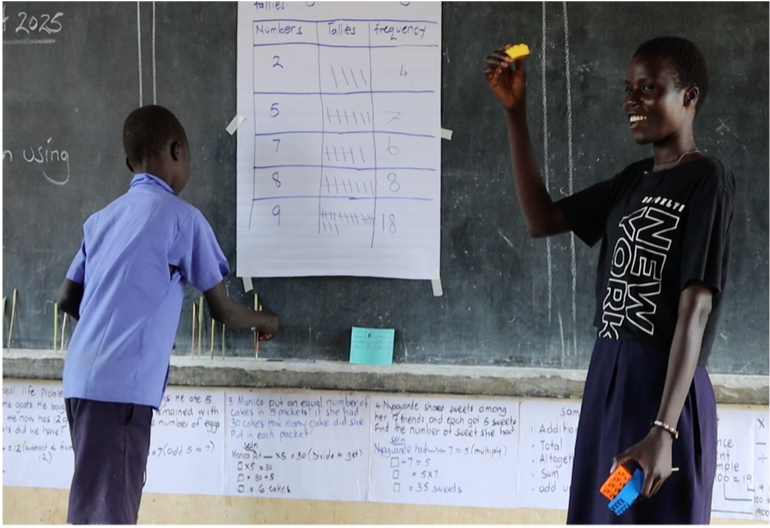
Lakica Monica, a primary four learner, presenting during the mathematics lesson.
Healing through Play
Bright Future recognizes that many children arrive with trauma. The school integrates TeamUp sessions, a learning through play psychosocial support initiative that allows learners to process emotions, build resilience, and develop coping strategies. “Play helps children forget hardships and focus on the joy of learning,” Ms. Stella observes.
Additional support from partner organisations provide some school feeding, though not enough for all the learners in the school, mental health services, menstrual hygiene management, and inclusive education training for teachers.
Challenges
Despite the remarkable progress, Bright Future still grapples with significant challenges. Overcrowded classrooms remain a pressing issue, with more than 100 pupils in some classes. This high teacher-to-pupil ratio stretches teachers thin, limiting their ability to give individual attention and fully implement LtP methods. Food insecurity remains a critical barrier, despite some development partner organisations’ support. Many children arrive at school hungry, unable to concentrate in class. Absenteeism and dropout rates rise, undermining the gains achieved through LtP. "To address hunger at school, we worked together with the community and parents to acquire a piece of land near the school where we are now growing crops such as maize, beans, and cassava. We believe this initiative will help provide food to feed our learners." Ms. Stella adds.
The school also struggles with limited learning materials, which reduces opportunities for creative, active learning. These challenges not only affect the quality of education but also place enormous strain on teachers, learners, and the community, threatening the sustainability of progress made so far.
Sustainability: A Shared Commitment
Sustainability is central to ensuring that LtP becomes a permanent part of the education system rather than a temporary project. Each stakeholder is playing a unique role in embedding the approach for the long term. The school leadership has institutionalised regular teacher orientations and peer mentoring sessions. Even when external training is unavailable, teachers at Bright Future Primary School continue to coach each other and share best practices. The leadership has also encouraged parents to contribute by making low-cost learning and teaching materials using locally available resources, fostering a sense of shared ownership.
“We have taken the initiative as a school to keep orienting our teachers on LtP and ensure that learning through play remains part of our culture,” Stella explains. Teachers, led by role models like Thomas, mentor their peers and model interactive teaching methods. By training others, they reduce dependence on external trainers and ensure continuity. Thomas’s recognition at the district level has inspired other teachers to embrace learning as part of their professional growth.
In addition, the district leadership is embedding LtP into district education policies. They coordinate teacher supervision and monitoring, ensuring consistent quality, and plan to allocate district resources to support LtP as part of routine education services. “Our role is to make sure LtP doesn’t disappear when the project ends. We want it to be part of every school’s routine,” Barnabas emphasizes.
Through these combined efforts, Bright Future Primary School is building a sustainable LtP that can be replicated across the district.