Strengthening Learning through Play in Ethiopia’s Education System: Insights from a New Policy Brief
Feb 06, 2026
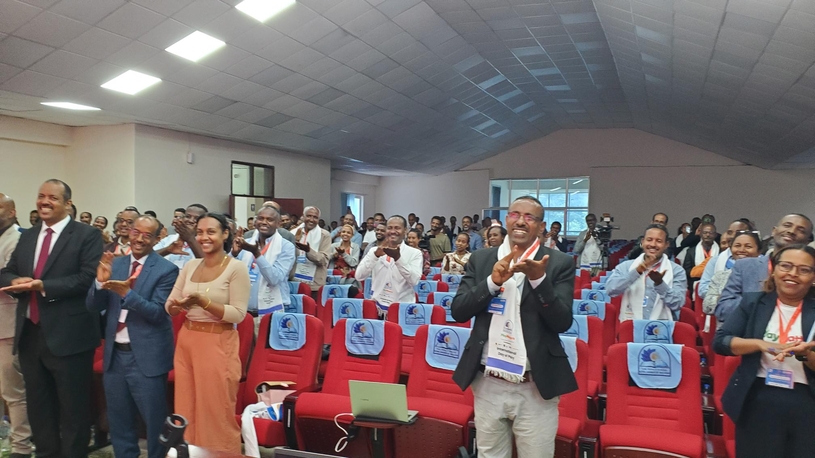
In June 2025, stakeholders in Ethiopia’s education sector gathered to explore the growing role of play in early childhood learning. The National Conference on Play-based Learning, held alongside the International Day of Play, brought together policymakers, researchers, teachers, parents, and children to discuss practical ways to strengthen play-based approaches in learning. The event was hosted by Kotebe University in partnership with the PlayMatters Consortium, creating a national platform to celebrate how children learn best.
The outcomes of this gathering are captured in a new policy brief, Valuing Play-Based Learning for Quality Early Childhood Education in Ethiopia. The brief translates the research, discussions, and experiences shared at the conference into practical recommendations for improving Ethiopia’s Early Childhood Development and Education (ECDE) system.
Why play is essential for children’s learning
A central message from the conference was clear: play is not a distraction from education; it is essential to it. Neuroscientific and programmatic research presented during the event affirmed that play strengthens children’s cognitive, social, emotional, and creative development. Through playful experiences, children learn to communicate, solve problems, collaborate, and build confidence.
In line with Ethiopia’s strong national policies that recognize the value of play, there are growing opportunities to strengthen classroom practice and accelerate the uptake of learning through play approaches. Increasing investment in teacher training, implementation of practical classroom strategies, and the use of low-cost, locally accessible teaching and learning materials can help educators more confidently integrate play into daily lessons.
To translate these concepts into impact, the policy brief proposes four priorities: even stronger collaboration among stakeholders in shaping and implementing ECDE policies that support play-based learning; expanded local research and evidence generation; increased advocacy to shift public perceptions on the value of play; and improved coordination across the education system to support effective implementation.
Growing evidence from PlayMatters
In several regions in Ethiopia, the PlayMatters project offers a practical example of how learning through play can be implemented at scale. Over the past five years, the project has worked closely with the Ministry of Education and Regional Education Bureaus to strengthen the integration of learning through play in both refugee and host community schools.
So far, the project has reached more than 200,000 children and over 3,000 teachers in 180 schools, supporting teachers with training to apply learning through play approaches in their classrooms, using locally available teaching and learning materials and the existing curriculum.
Findings from a recent randomized controlled trial in Ethiopia’s Somali region show that the PlayMatters teacher development model significantly improved both teaching practice and children’s learning and wellbeing outcomes. The study found that teachers demonstrated stronger instructional practices, better classroom management, and higher levels of student engagement after participating in the program.
Children in PlayMatters supported schools showed notable improvements in literacy and numeracy, as well as in social emotional skills, creativity, and overall wellbeing. These results provide strong evidence that learning through play can be effectively integrated into classrooms as a practical approach to strengthening teaching and supporting children’s holistic development.
Looking ahead
As the government continues to invest in quality early childhood education, the policy brief offers a clear path forward. By aligning policy, evidence, and classroom practice, stakeholders can ensure that play-based learning becomes not only a national priority, but an everyday reality for children across the country.
To read the full policy brief click here