Building Ownership, Improving Outcomes: How Communities Improved Enrolment, Engagement in Afar, Ethiopia
May 21, 2026
In the pastoralist community of Chifra, sending children to school has never been easy. Low student enrollment, high absenteeism, and limited community participation have historically hindered the performance of The Parent-Teacher-Student Association (PTSA), established to bridge the gap between school and community, struggled with unclear roles and limited capacity. This situation began to shift with the introduction of the PlayMatters Project at Dr Ten Primary School.
Before the PlayMatters intervention, PTSA members lacked the skills and knowledge needed to effectively support the school. As Mohammed Ali, the PTSA Chairperson, recalls, they were unsure of their responsibilities and contributed very little to school improvement efforts. However, through targeted training provided by the project, PTSA members gained a clearer understanding of school management, leadership, and community engagement. These trainings marked a turning point, equipping them with the skills needed to actively participate in school development.
With their new knowledge, the PTSA began to take initiative. One of their first major steps was revising their annual plan to include structured and purposeful activities. These included back-to-school campaigns, school clean-up initiatives, community dialogue sessions, resource mobilization efforts, and the promotion of play-based learning. As PTSA Secretary Yimam Seid explained, the training was eye-opening, helping members understand not only what their roles were, but also how to plan and implement activities effectively.
Among the most impactful initiatives were the back-to-school campaigns. Conducted twice a year, these campaigns combined market-day awareness sessions with house-to-house visits. PTSA members engaged directly with families, discussing the importance of education and addressing concerns that often kept children out of school. These consistent efforts led to a noticeable increase in student enrollment and a reduction in dropout rates. Parents who were once hesitant began to send their children to school more regularly, reflecting a growing awareness within the community about the value of education.
At the same time, the PTSA worked to improve the school environment itself. Recognizing that a safe and clean space is essential for learning, they organized regular school clean-up campaigns. These activities brought together students, teachers, and community members, fostering a sense of shared responsibility. Over time, the school became a more welcoming and conducive place for learning, encouraging students to attend regularly and participate actively.
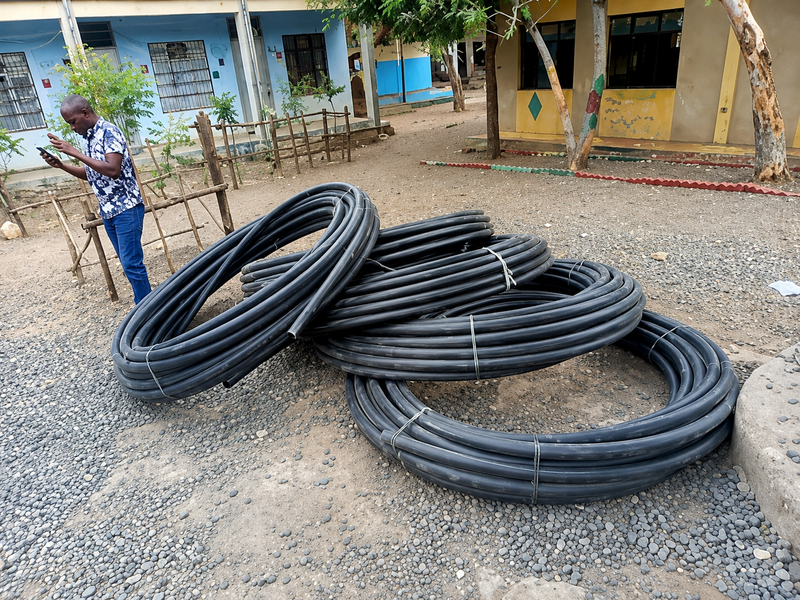
One of the most remarkable achievements of the PTSA was its success in mobilizing community resources. Through strengthened community engagement and collective action, the school was able to address one of its most pressing challenges: access to water. A 1,000-meter water pipeline was installed, with the PlayMatters Project supporting half of the materials and the community contributing the remaining resources and labor. This collaboration not only solved a critical infrastructure problem but also demonstrated the power of unity and shared commitment. The improved access to water significantly enhanced hygiene and sanitation conditions at the school, contributing to a healthier learning environment.
In addition to these efforts, the PTSA began playing a more active role in school governance. Members became involved in managing student discipline, resolving conflicts, and facilitating discussions between parents and teachers regarding student performance and behavior. This increased engagement strengthened accountability and improved relationships among all stakeholders. Open dialogue and collaborative problem-solving replaced previous misunderstandings, resulting in a more harmonious school environment.
Another important area of change was the community’s perception of play-based learning. Initially, many parents viewed play as a distraction rather than a meaningful educational approach. To address this misconception, the PTSA organized community dialogue sessions and created opportunities for parents to observe children engaging in structured play activities, particularly during events such as the International Day of Education. These demonstrations helped parents understand that play is not merely recreational, but an essential component of children’s cognitive and social development. Gradually, attitudes began to shift, and play-based learning gained wider acceptance within the community.
The combined efforts of the PTSA and the PlayMatters Project have led to significant and visible improvements at Dr. Ten Primary School. Community awareness and participation have grown, school governance has strengthened, and critical resources, such as water, have been successfully mobilized. Perhaps most importantly, the community now feels a strong sense of ownership and responsibility toward the school.
The experience of Dr. Ten Primary School highlights the transformative potential of empowering community structures like the PTSA. When provided with the right training, guidance, and support, community members can become powerful agents of change. What was once a school facing persistent challenges is now a growing example of collaboration, accountability, and progress.
Today, the PTSA members no longer see themselves as passive participants, but as active leaders in shaping the future of their children’s education. As Mohammed Ali proudly concluded, the success of the school is now deeply shared by the community itself—a reflection of how far they have come.