PlayMatters shares evidence on strengthening teacher professional development at East Africa regional education conference
Aug 28, 2026
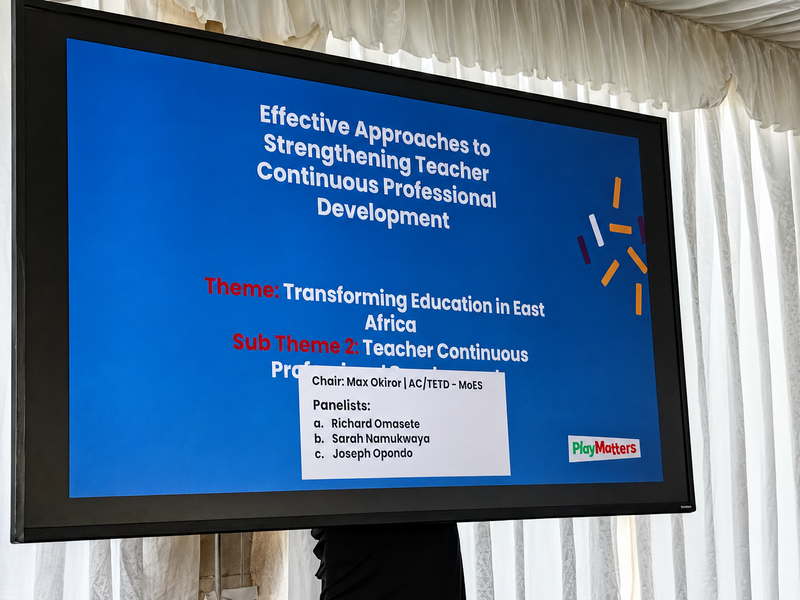
Nairobi, Kenya, August 2026: PlayMatters joined education leaders, policymakers, researchers and practitioners from across East Africa at the 2nd East African Community Regional Conference on Education to share evidence and learning on how continuous professional development can better equip and support teachers, particularly in refugee and resource-constrained settings.
Held in Nairobi from 25–28 August 2026, the conference brought together more than 600 participants from the eight East African Community Partner States. Convened under the theme “Transforming Education in East Africa: From Commitments to Impact, Fostering Resilience and Future-Ready Systems for Sustainable Development,” the conference provided a regional platform for sharing evidence and identifying practical approaches to persistent education challenges, including teacher capacity and professional development.
PlayMatters contributed to these discussions through a panel on “Effective Approaches to Strengthening Teacher Continuous Professional Development.” The panel brought together three complementary perspectives from PlayMatters' implementation and research: strengthening education systems to support continuous teacher learning; evidence on the effectiveness of teacher professional development; and the role communities and school governance structures play in sustaining improvements in teaching practice.
The panel was chaired by Max Okiror, Assistant Commissioner, Teacher Education Training and Development Department (TETD), Ministry of Education and Sports, Uganda.
Moving beyond one-off teacher training
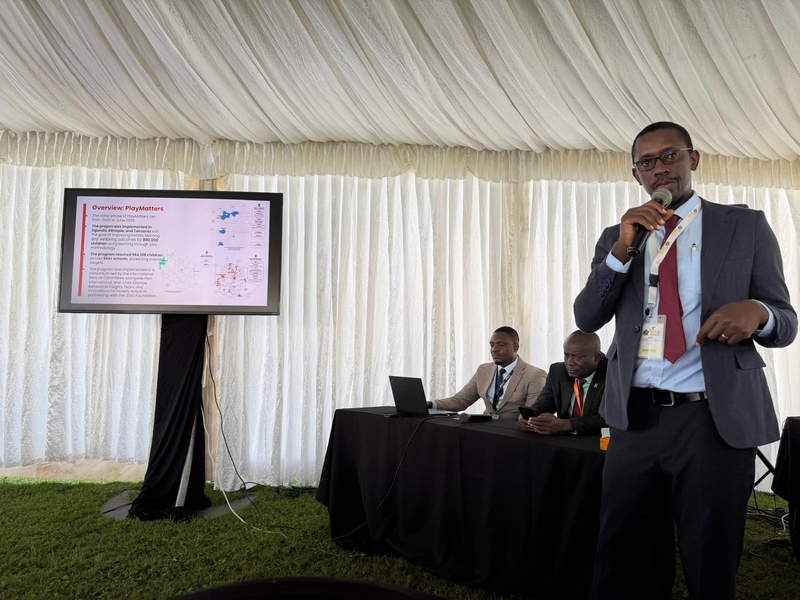
Richard Omasete of the International Rescue Committee speaking on the importance of embedding Learning through Play (LtP) within existing Teacher Continuous Professional Development (TCPD) systems.
Richard Omasete of the International Rescue Committee presented evidence on the importance of embedding Learning through Play (LtP) within existing Teacher Continuous Professional Development (TCPD) systems. A central message from the presentation was that teacher professional development does not end when training ends. While training can introduce teachers to new knowledge and pedagogical approaches, sustained changes in classroom practice require opportunities for teachers to practice, reflect, receive feedback and continue learning alongside their peers.
Evidence from PlayMatters TCPD pedagogy shows the value teachers place on school-based professional support, including coaching, mentoring and peer learning from people they are familiar within the school. School-based TCPD has also helped shift LtP from an individual teacher practice towards a broader school culture supported through collaborative lesson planning, mentorship, school leadership and peer learning.
The presentation also highlighted the potential of virtual Communities of Practice to complement face-to-face professional development by enabling teachers to share experiences, resources and demonstration videos and access peer support when needed. However, sustainable scale requires investment in the wider education system, including the human and financial capacity needed for regular coaching, supervision and follow-up.
Evidence of changes in teacher wellbeing and practice
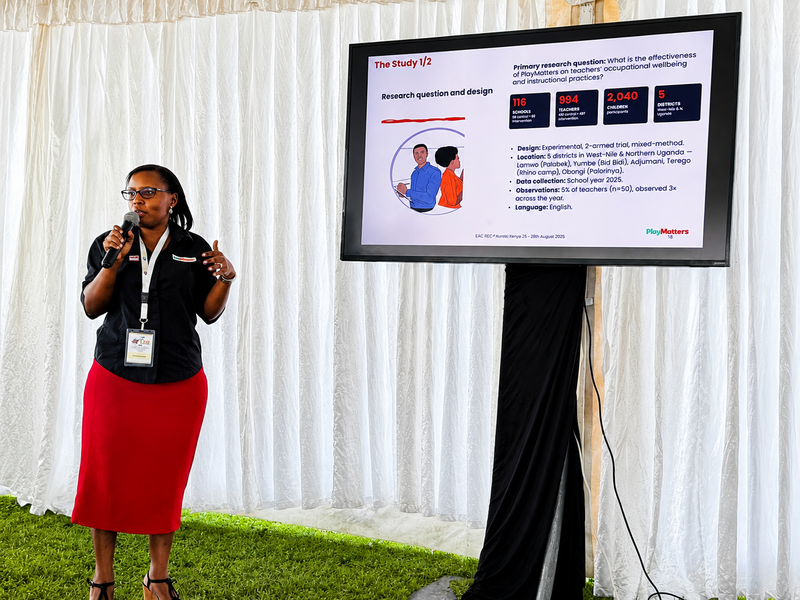
Sarah Namukwaya of War Child Alliance presented findings from the PlayMatters Uganda Randomized Controlled Trial
Sarah Namukwaya of War Child Alliance presented findings from the PlayMatters Uganda Randomized Controlled Trial examining the effectiveness of the PlayMatters teacher professional development intervention in Uganda. Conducted across 116 schools involving 994 teachers and 2,040 children in five districts in West Nile and Northern Uganda, the study examined changes in teachers' occupational wellbeing and instructional practices.
The findings showed moderate improvements in teacher occupational wellbeing and classroom practice. The PlayMatters TCPD pedagogy improved support from school administration, reduced burnout and improvements in teacher self-efficacy related to group management.
The research also highlighted areas requiring continued attention. Participation in some CPD activities was affected by factors including heavy teacher workloads, planning and communication challenges, and attitudes towards peer learning. The findings point to the importance of providing teachers with sufficient time and structured opportunities to continue learning, exchanging ideas and engaging in professional development.
Creating the conditions for teachers to succeed
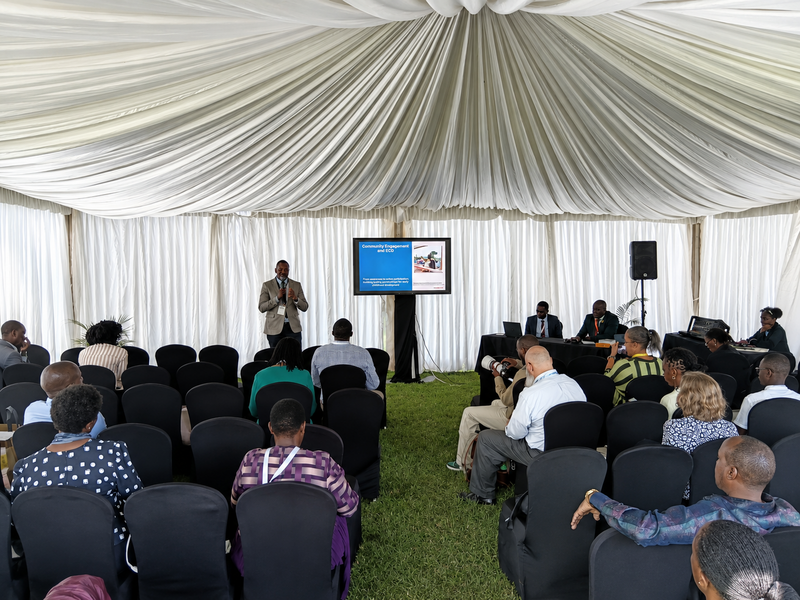
Joseph Opondo of Plan International presenting on the role of communities and school governance structures in teacher professional development
Joseph Opondo of Plan International explored another important dimension of teacher professional development: the role of communities and school governance structures in creating an environment where teachers can consistently apply what they learn. Drawing on PlayMatters learning studies on community engagement from Uganda, Tanzania and Ethiopia, the presentation showed how school leaders, parents and school governance structures can influence whether teachers have the support, materials, accountability and enabling environment required to sustain new teaching practices.
Community engagement can contribute to teacher practice by strengthening school governance, mobilising locally available teaching and learning materials, supporting learning environments and increasing recognition of teachers' efforts. The evidence suggests that sustainability is strongest where school leadership remains proactive, governance structures are functional, communities recognise the value of the approach, and practices become embedded in routine school systems.
He also emphasised that community engagement should be treated as part of the architecture of teacher professional development and learning, not as an add-on, since communities do not only provide an enabling environment for TCPD but they are mostly what is left to sustain interventions when funding ends.
Together, the three presentations reinforced a shared message: effective teacher professional development requires more than training. Sustainable improvements in teaching practice depend on continuous learning, supportive school leadership, peer collaboration, engaged communities and education systems with the capacity to sustain these structures.
As East African education stakeholders work to move from commitments to measurable improvements in learning, the PlayMatters experience provides evidence for investing not only in teachers' skills, but also in the systems and relationships that enable teachers to continue learning and put those skills into practice.