Making Learning through Play More Inclusive: Strengthening Disability Inclusion in PlayMatters 3.0
The PlayMatters consortium and national implementing partners are strengthening their capacity to ensure that children with disabilities can participate meaningfully in play-based learning.
Nov 19, 2026
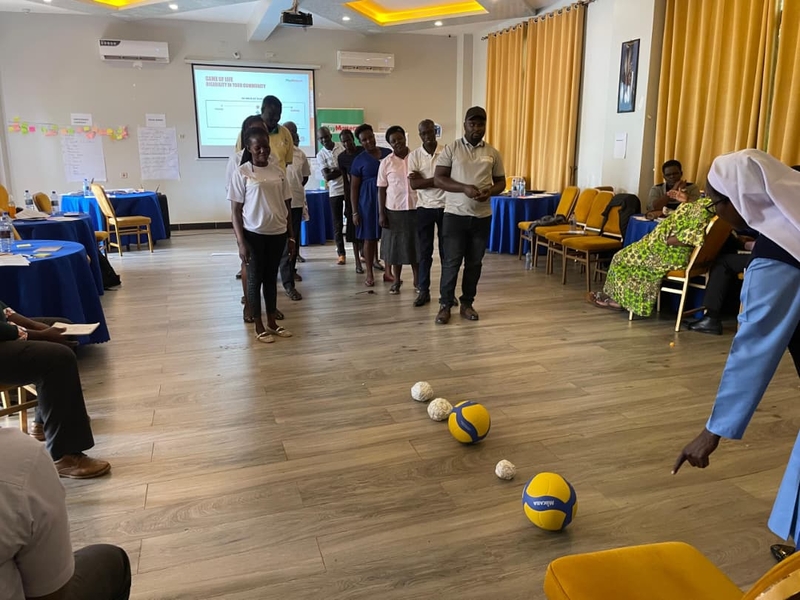
Every child deserves the opportunity to learn, play and participate fully in school. Yet for children with disabilities, barriers within classrooms, learning activities and wider school environments can limit these opportunities.
As PlayMatters enters its next phase, disability inclusion is becoming an integral part of how the project supports teaching and learning in refugee-hosting and crisis-affected communities. Building on lessons from the first phase, PlayMatters 3.0 is strengthening the knowledge and practical skills of its teams and partners to ensure that learning through play is accessible, inclusive and responsive to children with different abilities.
From 10 to 12 November 2026, PlayMatters consortium and national implementing partners gathered in Hoima, Uganda, for a three-day Disability Inclusion Technical Orientation. Led by Plan International, with support from Special Needs Education experts, the orientation focused on translating disability inclusion principles into practical approaches that can be integrated into PlayMatters implementation.
Building on lessons from PlayMatters' first phase
During PlayMatters 2.0, feedback gathered through the project's accountability mechanisms highlighted barriers affecting the participation of children and teachers with disabilities. A subsequent disability inclusion mapping exercise, involving consultations with teachers, community leaders and education stakeholders, identified nine key gaps contributing to exclusion. The findings also highlighted existing inclusive practices that could be strengthened.
These lessons informed revisions to the PlayMatters Core Package, with disability inclusion integrated into the project's technical materials and approaches rather than treated as a separate intervention.
However, developing inclusive materials is only one part of the process. Effective implementation also depends on the ability of project staff and partners to recognize barriers to participation, adapt activities and support teachers to create learning environments where children of different abilities can participate meaningfully.
The orientation was designed to strengthen this shared understanding and build the practical skills needed to deliver the revised package.
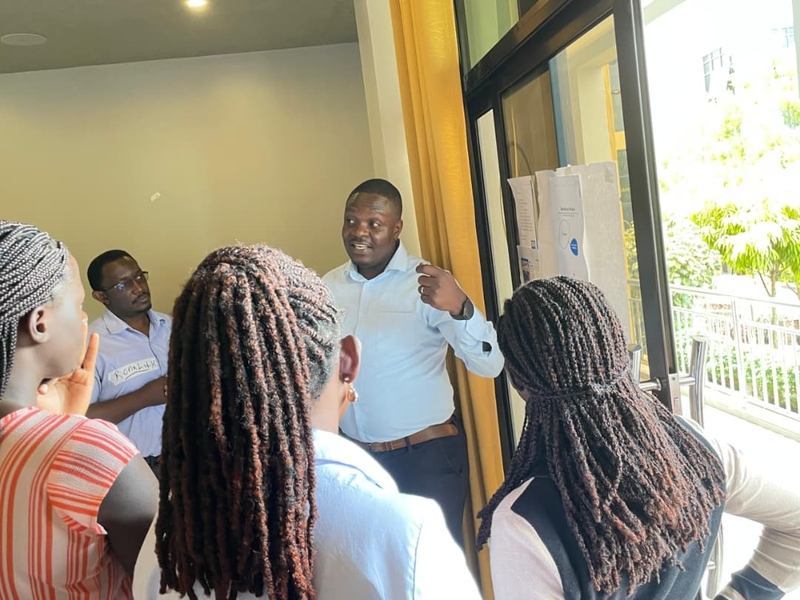
The PlayMatters consortium and national implementing partners are strengthening their capacity to ensure that children with disabilities can participate meaningfully in play-based learning.
Moving from understanding disability to inclusive practice
The three-day orientation brought together staff from PlayMatters consortium organizations and national implementing partners, alongside education specialists.
Through participatory discussions, group exercises, demonstrations, and play-based activities, participants explored how perceptions, attitudes, and environmental barriers can influence the participation of children with disabilities.
A central focus was understanding disability through the social model, which recognizes that exclusion can arise not only from individual impairments but also from barriers in the surrounding environment, institutions, and society.
Participants also explored how disability inclusion intersects with gender equality, child protection, and children's wellbeing.
Importantly, the orientation went beyond developing a common understanding of disability to examine how inclusive approaches can be applied in everyday programming.
Using practical tools such as the TREE model: Teaching style, Rules, Environment, and Equipment. Participants explored how play and learning activities can be adapted to accommodate children with different abilities.
They also worked with the inclusion spectrum and the U-Plan approach to identify barriers to participation and develop practical, low-cost solutions.
These exercises reinforced an important principle: inclusive Learning through Play does not necessarily require entirely new activities or resources. In many cases, thoughtful adjustments to how activities are planned, facilitated and supported can help create more meaningful opportunities for participation.
Encouraging gains in knowledge and confidence
The orientation provided an opportunity to assess changes in participants' understanding of disability inclusion and its application within PlayMatters.
Among 24 participants who completed both the pre- and post-training assessments, average scores increased from 66.1% before the orientation to 90.6% afterwards, representing an improvement of 24.5 percentage points.
Beyond the assessment results, the activity report documented greater confidence among participants in identifying barriers and incorporating disability inclusion considerations into planning, activity design and implementation.
The participation of Special Needs Education experts from district education offices and a primary teachers' college also brought practical experience from the education system into the discussions, helping participants connect technical concepts with the realities of teaching and learning.
While these results demonstrate encouraging immediate gains in staff knowledge, sustained technical support will be important to ensure that the learning translates into more inclusive programming and classroom practice.
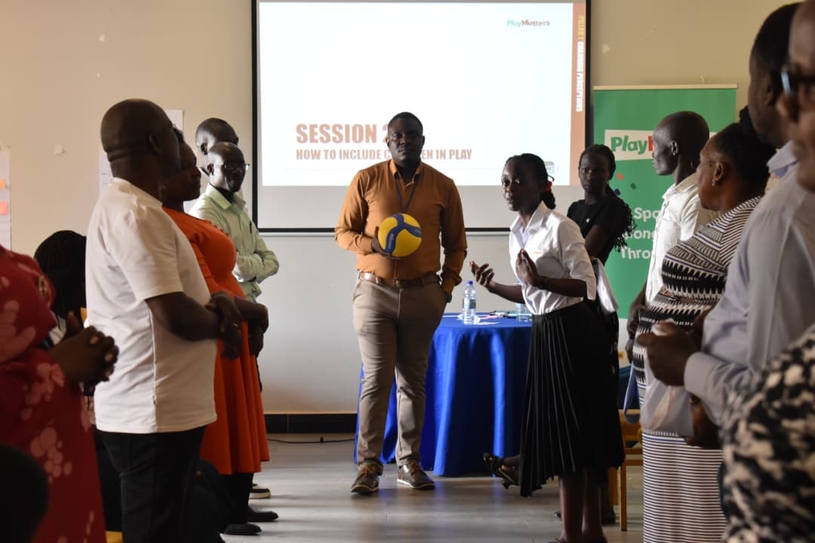
The PlayMatters consortium and national implementing partners are strengthening their capacity to ensure that children with disabilities can participate meaningfully in play-based learning.
Strengthening inclusion through partnership and continued support
The orientation also demonstrated the importance of collaboration in advancing disability inclusion.
Plan International, which provides technical leadership on disability inclusion within the PlayMatters consortium, worked alongside IRC, War Child Alliance, national implementing partners and education system specialists to support a shared approach.
This collaboration is particularly important as PlayMatters 3.0 strengthens national partner-led implementation and works more closely with education institutions and government systems.
Participants identified the need for continued mentorship, practical guidance, and follow-up support to reinforce inclusive approaches across teacher training, classroom activities, community engagement, and project implementation.
The action plans developed during the orientation will help guide how partners integrate disability inclusion into upcoming activities and apply the tools introduced during the training.
The Uganda orientation forms part of a broader PlayMatters 3.0 approach to strengthening disability-inclusive implementation across Ethiopia, South Sudan and Uganda, using a common technical foundation adapted to country contexts. Similar technical orientations will also be conducted for PlayMatters teams and partners in Ethiopia and South Sudan, ensuring that the knowledge, skills and practical approaches introduced in Uganda are extended across all three implementation countries.
Towards learning through play that includes every child
For PlayMatters 3.0, disability inclusion is not simply about ensuring that children with disabilities are present in learning spaces. It is about creating the conditions for them to participate, engage and benefit meaningfully from learning alongside their peers.
By strengthening the capacity of consortium teams, national partners and their connections with education system specialists, PlayMatters is taking practical steps towards making inclusive teaching and learning a consistent part of program delivery.
The next step is translating this learning into action by supporting teachers and partners to identify barriers, adapt learning experiences and create environments where every child has an opportunity to learn through play.