Beyond PlayMatters: Making Learning through Play a Lasting Part of Education Systems
Nov 18, 2026
As PlayMatters enters its next phase, teams from Ethiopia, South Sudan and Uganda are working to translate evidence into country-specific pathways for scaling learning through play
Over the past six years, PlayMatters has demonstrated the potential of learning through play to strengthen teaching and improve children's learning experiences in refugee-hosting and crisis-affected communities. Building on these achievements and lessons, PlayMatters 3.0 is focused on supporting education systems across Ethiopia, Uganda and South Sudan to adopt, deliver, and sustain learning through play, ensuring its benefits reach more children and extend beyond the life of the project.
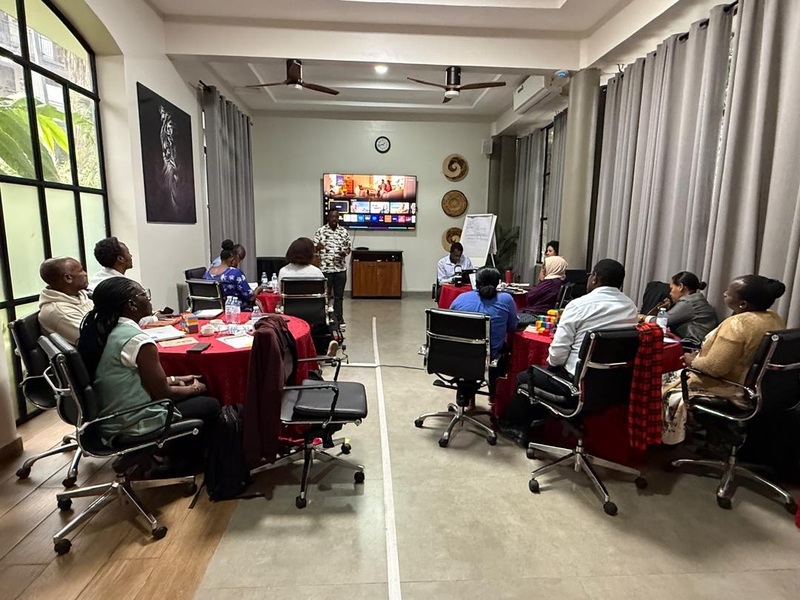
From 27-29 October 2026, PlayMatters policy and advocacy teams from the three countries gathered in Kampala, Uganda, for a scaling and systems strengthening workshop. The discussions focused on a defining question for the new phase: how can learning through play move from successful project implementation to an approach that education systems can sustain and expand over time?
Government ownership Is key to sustainability
A major takeaway from the workshop was that sustainable scaling begins with government ownership.
For learning through play to become an established teaching approach, it needs to be reflected in relevant education policies, teacher training curricula, implementation guidelines, institutional plans and budgets.
This requires close collaboration with government institutions responsible for education policy, curriculum development, teacher education, inspection, and quality assurance.
Universities and teacher training institutions are particularly important in this process. By integrating Learning through Play into pre-service teacher education, tutor development and continuous professional learning, they can help ensure that teachers acquire the skills and knowledge needed to use play-based approaches effectively.
Partnerships with humanitarian and development organizations can also support wider adoption, particularly in communities affected by displacement and other emergencies. However, these partnerships are most effective when they complement government priorities and strengthen existing education structures rather than create parallel systems.
To achieve this, PlayMatters country teams will need to identify the right institutions, decisionmakers and champions, understand their influence and interests, and develop engagement strategies that respond to each country's context.
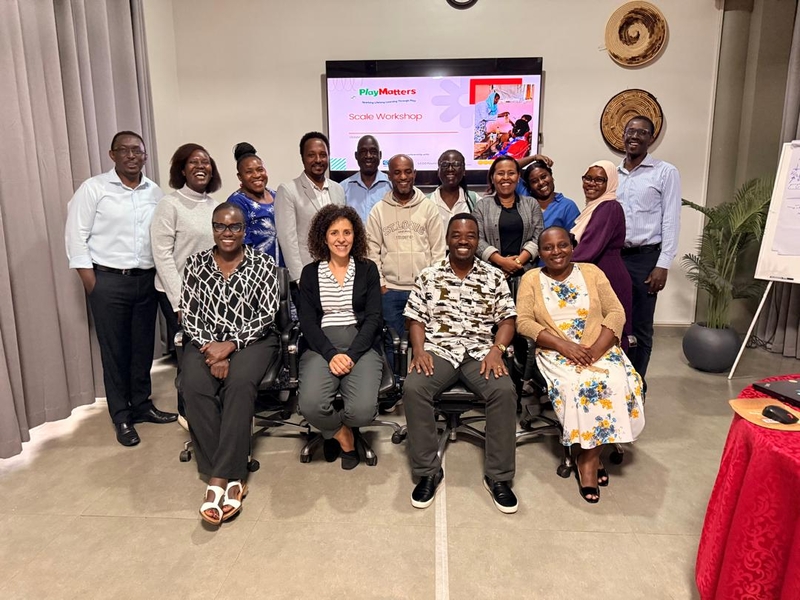
Participants from the PlayMatters consortium attending the scaling workshop
Country specific scaling pathways
Although Ethiopia, South Sudan and Uganda share the ambition of scaling Learning through Play, their education systems, policy environments and institutional capacities differ.
The workshop emphasized that successful scaling must respond to these differences.
Each country will identify a focused set of pathways that build on existing government priorities, institutional mandates, and teacher development structures.
In Uganda, PlayMatters is working with Makerere University to integrate learning through play into pre-service teacher education, alongside developing a national e-course to expand teachers' access to professional learning.
In Ethiopia, PlayMatters is building on established partnerships with government and teacher education institutions to integrate learning through play into teacher training programs and strengthen government-led professional development pathways.
In South Sudan, PlayMatters is laying the groundwork for future scale by adapting and testing the PlayMatters Core Package with government and local partners, generating evidence and establishing institutional relationships to inform future expansion.
Turning shared ambitions into action
The scaling workshop marked an important step towards translating these commitments into practical country plans and a coordinated regional approach.
PlayMatters teams will further refine their policy priorities, select feasible scaling pathways, and work with government institutions and partners to strengthen ownership.
They will also improve how they track progress, looking beyond participation figures to assess whether engagement is contributing to policy decisions, institutional adoption, implementation, and sustainable financing.This work will help ensure that the expansion of learning through play is accompanied by evidence of quality, equity, and lasting institutional change.
Building systems where every child can learn through play
Ultimately, the ambition of PlayMatters 3.0 is to make learning through play a recognized, supported and sustainable part of education systems. By strengthening government ownership, institutional capacity and evidence-informed implementation, PlayMatters is working towards a future where more teachers and children can benefit from quality learning through play long after the project ends.